





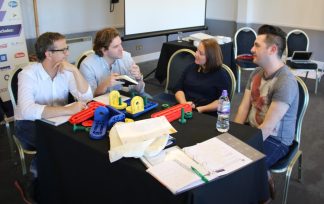

Get Inspired
How do facilitators like you use MTa tools? #TheMTaWay
Shop with confidence
Free Worldwide Delivery
Express delivery to your address
A Lasting Investment
You’ll get unlimited access to the MTa App & learning resources
Money Back Guarantee
28 day return policy. Buy with confidence
Expert Support
An experienced facilitator is always on hand to answer your questions
Solving your problems
It’s right for you if: You want a simple and effective kit that helps managers to become more effective coaches.
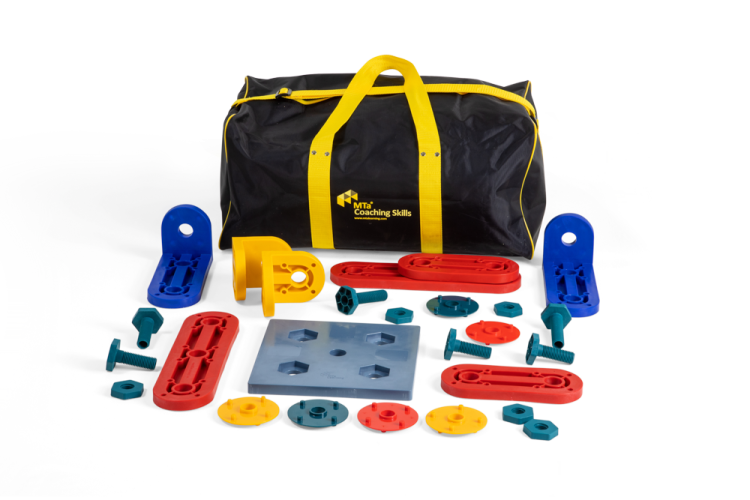
What’s included: An MTa holdall containing a set of robust components, facilitator’s overview and summary of each activity, along with hard-wearing and reusable participant and observer briefs, and learning transfer documentation including questionnaires.
When to use it: When you need to help a group of managers to explore and develop practical, day to day coaching skills for use in the workplace.
A coaching workshop to cultivate lasting change
Preparation: The participants as coaches
A diagnostic questionnaire sets the tone and gets participants thinking about their current understanding of coaching. What is it? What are the pros and cons of a coaching approach? And perhaps most challenging: where are the boundaries of their current coaching competencies?

Getting the job done: Business as usual
Managers often employ a directive management style to ‘get the job done’, but is this really the best way to do things? This stage invites reflection on the benefits of investing more time in people. By exploring current habits, participants can arrive at some uncomfortable realisations to build on later.

The skills of an effective coach
This stage allows groups to hone in on their perceived coaching abilities, and the principles of effective coaching in action. Which skills need to be used more (or less) to foster success? Participants are encouraged to coach – and to critique! – each other, laying the groundwork for reflection.
Adopting a coaching approach
Here participants are tasked with adopting an approach consistent with the basic principles of effective coaching, including identifying, generating, and making use of opportunities. This highlights the contrast between these principles and those used in earlier stages in a very real way.
Transferring the learning
Here participants develop plans for applying their new learnings in the workplace, with specific prompts on coaching less tangible skills like communication or leadership. This stage also adopts the activity-followed-by-review structure to allow lasting, actionable change to take place.
Part 2 (optional)
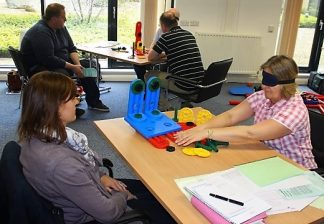
In part 2 participants learn how to coach others in developing less tangible skills, including helping others to develop ideas and concepts. The session begins with small group structured reviews of personal progress to date and establishing and agreeing personal learning objectives, which are then addressed through small group activities designed to involve everyone as the coach, the coached or the observer.
Empower your managers to empower their people

Laser-targeted learning: MTa Coaching Skills uses cutting edge theory to identify personal gaps and develop powerful coaching competencies.
Painless facilitation: Our MTa Online resources combine with a suite of high-quality guides to make this workshop run smoothly.
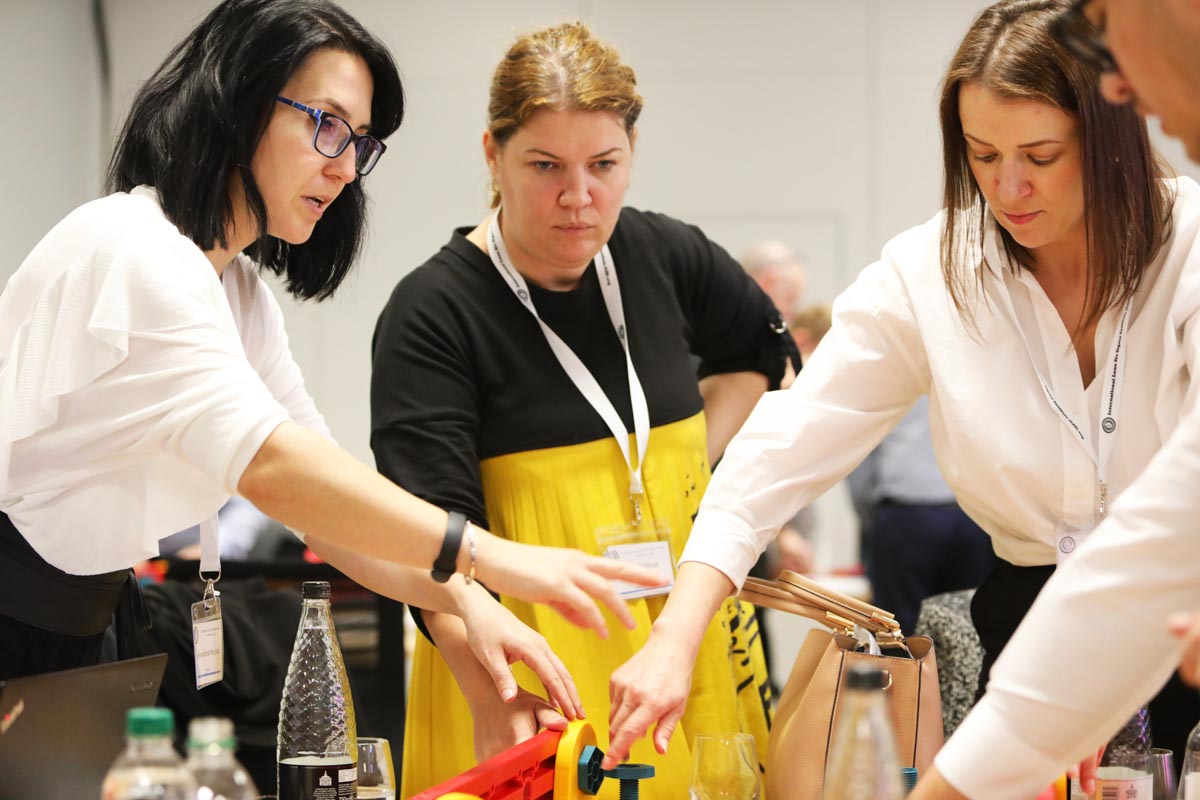
Deeply immersive: Participants will find themselves invested in their own learning just as much as that of the group.
Lasting outcomes: Our established review and repeat structure ensures all learning outcomes are reflected upon, developed, and carried forward.
Direct real-world application: Coaching is a hugely powerful skillset that delivers real benefits to your managers, their people, and your workplace.
The world’s first choice for experiential learning
"...MTa tools... are stars in any learning playground."
“Legos, MTa tools and board games are stars in any learning playground.”

Highly effective...
A highly effective and practical insight into coaching skills. It really insures people understand the key constituents.
 English